Add Row
Add Element
Add Element
  • Channel
    • VIRTUAL EVENTS BILLBOARD
    • CONFERENCES & CONVENTIONS
    • # THE VORTEX ALTITUDE
  • Featured
    • THE VORTEX VISIONARY VIEW
    • African Changemakers
    • Future of Africa
    • Sustainable Africa
    • Women Vortex
    • Vortex Global Pulse
    • Habitat Trails
    • InterContinental Issues
    • Intracontinental Currents
    • #FUTURE FEATURE INVITATION
April 28.2025
2 Minutes Read

US Government Supports Liberia's Multi-User Rail Initiative: Key for Investors

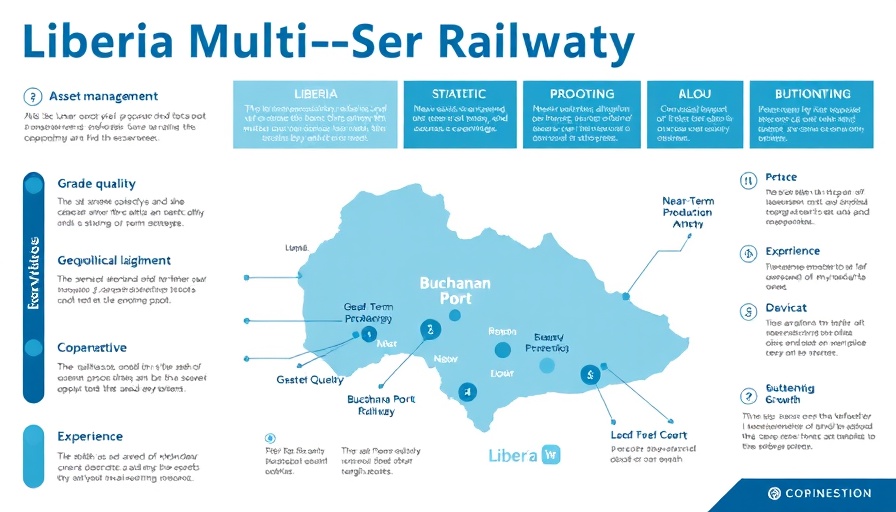
Liberia Multi-User Railway Initiative infographic with map and key features.

US Government Backs Multi-User Rail Initiative in Liberia

The United States Government has officially endorsed Liberia’s ambitious plan to develop a multi-user railway, managed by an independent operator. Senior State Department Advisor on Africa, Mr. Massad Boulos, emphasized that reliable infrastructure is fundamental to fostering sustainable development. He praised President Boakai’s efforts aimed at transforming the existing railway system and urged all stakeholders to expedite the process for the benefit of the Liberian economy.

Implications for Liberia’s Economy

The endorsement comes on the heels of Ivanhoe Atlantic’s recent negotiations with the Liberian government, which culminated in the completion of a comprehensive concession agreement on April 18, 2025. This agreement is not only expected to facilitate an enhanced transport infrastructure but also promises to generate substantial economic opportunities for the local populace through revenue accrued from increased iron ore transportation and potential agricultural developments. With an investment that could amount to billions of dollars, the stakes are high for both local and foreign investors eyeing Liberia's recovery from historical infrastructural neglect.

Transitioning Ownership and Management

The existing railway infrastructure was historically controlled by Indian mining interests which limited its potential for broader economic contribution. Under the new model proposed by President Boakai, a National Railway Authority will oversee the selected independent operator, focusing on fairness and transparency to attract various users, thereby democratizing access to this critical transport network.

What Lies Ahead for Liberia?

As Liberia gears up for the potential changes stemming from the agreement, questions remain on the influence of these initiatives on future foreign relations and investments, particularly with the US standing firmly behind the plan. Observers note the need for strategic alignment with broader geopolitical ambitions as the African continent positions itself on the global stage, especially through frameworks like the African Union and the implications for the Digital economy in Africa.

A Call to Action for Stakeholders

With the completion of the concession agreement being under final review by the Inter-Ministerial Concessions Committee, it is crucial for stakeholders—including policymakers, investors, and community members—to engage actively in this transformative process. As Liberia moves toward realizing this multi-user rail initiative, the support from the US government, alongside competitive investments, can serve as a catalyst for profound economic change.

Frontline Voices (Opinion & Analysis)

11 Views

0 Comments

Write A Comment

*
*
Please complete the captcha to submit your comment.
Related Posts All Posts

Rwanda's Autism Crisis: Breaking the Silence and Stigma

Update Understanding the Struggles of Autism in RwandaIn the lush hills of Rwanda, where community ties run deep, the story of Claudine and her son Ethan shines a light on a silent struggle faced by many families. As a mother, Claudine learned early that society often reacts with misunderstanding to differences, especially when it comes to children with Autism Spectrum Disorder (ASD). Ethan, who communicated through gestures and sensory movements instead of words, quickly became the subject of neighborhood whispers, cruelly labeled as "a curse." This stigma isolated Claudine, dramatically altering her interactions, including those with her faith community. The initial confusion turned to a long journey towards understanding—a journey that many families dealing with autism in Rwanda also navigate.The Alarming Statistics of Autism in RwandaEstimates suggest approximately 19,900 children in Rwanda currently live with autism, within a broader population of around 50,000 individuals. The country grapples with a child autism rate of approximately 432.57 per 100,000 children. Such figures starkly highlight the urgent need for recognition and intervention within a culture where autism not only remains misunderstood but also faces significant societal stigma.Barriers to Effective SupportThe barriers are manifold. Families often deal with financial strain and emotional tolls as they seek out specialized services, which are scarce and largely unavailable. Approaches that successfully integrate autism into educational settings are still in their infancy. Organizations such as Autisme Rwanda manage only about 100 cases per year, showcasing a glaring disparity between the demand for care and the services available. This scarcity often leads to educational exclusion, leaving many children without the opportunities they deserve simply because schools lack the necessary resources to support their unique learning needs.Rwanda’s Commitment to Global StandardsRecognizing autism as a critical issue, Rwanda has vowed to improve conditions for autistic individuals, marking significant days like World Autism Awareness Day. The theme for this year, "Autism and Humanity: Every Life Has Value," underscores the global movement towards understanding autism as part of the rich tapestry of human diversity rather than a condition needing “fixing.” Legislative frameworks like the Rwanda Constitution and various sectoral strategies place emphasis on inclusivity and equal rights for persons with disabilities, reinforcing the commitment to tackle misconceptions and provide equitable education.Urgent Calls for ActionThis observance, however, calls for more than just awareness; it demands action. Continuous investment in early diagnosis and education systems is crucial. Community health workers and educators should be equipped with the tools necessary to identify and address autism. Furthermore, training programs for teachers on differentiated instruction and curriculum adaptation are essential to foster an inclusive learning environment. As Claudine has learned, the fight for the dignity and inclusion of children like Ethan is not just personal; it is a social responsibility that requires a collective effort.A Future of Hope and InclusionClaudine’s experience mirrors countless others, revealing the resilience inherent within families navigating autism in Rwanda. It is a reminder that each child, regardless of their neurodevelopmental challenges, harbors unique potential. As nations worldwide recognize the value of autism in the broader human context, Rwanda has the opportunity to lead the way in championing inclusivity that extends beyond acknowledgment into meaningful and sustainable support.

BRVM 30 Index Shake-up: A New Path for Africa's Financial Future

Update A New Era for African Financial Markets: The BRVM's Strategic Recalibration The Bourse Régionale des Valeurs Mobilières (BRVM), Africa's premier regional stock exchange, has made significant adjustments to its benchmark BRVM 30 Index, taking bold steps to reflect a rapidly evolving economic landscape. This marks a critical juncture for investors and policymakers keenly observing Africa's burgeoning economic narrative. Understanding the Changes in the BRVM 30 Index With the latest reshuffle, the BRVM aims not only to enhance liquidity but also to attract more foreign investments. The revised index highlights companies that display strong governance and financial performance, ensuring that the BRVM aligns itself more closely with other global stock exchanges. The BRVM 30 now serves as a barometer for investor sentiment, providing insights into the health of Africa's financial markets amid ongoing geopolitical shifts. The Implications for Investors and Policymakers Business leaders and investors must take note of the adjusted criteria for inclusion in the BRVM 30. The shift promises to increase the visibility of high-performing companies within the region, opening avenues for enhanced investment opportunities. For policymakers, the changes underscore the necessity of crafting responsive trade policies that bolster corporate governance and business growth, crucial for maintaining international investor confidence. Tapping into Africa's Investment Potential Africa's role in the global economy continues to expand, fueled by increased foreign interest in the BRVM and similar financial hubs. The adjustment of the BRVM 30 is emblematic of a broader trend where African nations position themselves strategically on the global economic stage, particularly as the continent pursues closer ties within frameworks like the African Continental Free Trade Area (AfCFTA) and relationships with major economies like China and the EU. Future Trends and Predictions As the BRVM evolves, future projections indicate a significant surge in digital financial platforms and a collaborative approach in driving Africa's economic agenda. Investors should prepare for increased entry into sectors that focus on sustainability, digital economy trends, and innovations enhancing market accessibility. The ongoing reforms signify a move toward transparency and efficiency in Africa's financial markets, which could attract unprecedented levels of foreign direct investment (FDI). Actionable Insights for Stakeholders For investors, aligning strategies with the new compositions of the BRVM indices is vital. This may include diversifying portfolios to include emerging firms that meet the new rigorous standards. Additionally, staying abreast of ongoing trends in African governance and trade policies will prove essential for making informed investment decisions. Ultimately, the recent changes in the BRVM 30 Index not only reflect a commitment to robust financial practices but also offer a glimpse into the future prosperity of Africa's economies. Engaging with this landscape proactively is key for stakeholders looking to capitalize on emerging opportunities in this dynamic region.

Afreximbank's $2.5 Billion Push: Transforming Africa’s Oil Dynamics

Update Afreximbank's Unprecedented Loan Underwriting for Dangote Refinery Afreximbank, the pan-African multilateral financial institution, has committed to underwriting a significant loan of $2.5 billion for the Dangote Oil Refinery, marking a pivotal moment in Africa's quest for self-sufficiency in oil production. Wearing the mantle of Africa's foremost investment bank, Afreximbank's move is a response to the continent's pressing need for improved fuel sovereignty amidst fluctuating global oil prices and geopolitical uncertainties. Implications for the African Economy The Dangote Refinery, estimated to be one of the largest single-train refineries globally, stands as a linchpin for Nigeria's economy, promising to reduce fuel imports drastically while creating thousands of jobs. The strategic financial backing from Afreximbank signifies a larger trend of African nations increasingly asserting their economic independence through large-scale infrastructural projects. Geopolitical Context: Africa at the Crossroads As global perceptions of Africa evolve, this investment plays into broader trends affecting foreign relations and trade. With recent shifts in partnerships—highlighted by Africa’s growing role in BRICS and enhanced relations with China—this underwriting underscores the potential of intra-African trade. With the African Continental Free Trade Area (AfCFTA) set to boost regional commerce, the refinery is poised to play a crucial role in energy security across the continent. Potential Challenges Ahead While the underwriting is a strong vote of confidence, challenges abound. The economies of scale, political stability, and competitive pricing in both the domestic and international markets remain pressing concerns. Additionally, the successful realization of this project will require navigating the intricate geopolitics that often accompany large financial undertakings in Africa. Concluding Thoughts: A Call for Informed Participation The Afreximbank's $2.5 billion commitment is not just a financial transaction but a clarion call to investors, policymakers, and stakeholders to engage proactively in the reshaping of Africa's economic landscape. Understanding and participating in this evolution could unlock new avenues for growth and cooperation across the continent.

Terms of Service

Privacy Policy

Core Modal Title

Sorry, no results found

You Might Find These Articles Interesting

T
Please Check Your Email
We Will Be Following Up Shortly
*
*
*