Add Row
Add Element
Add Element
  • Channel
    • VIRTUAL EVENTS BILLBOARD
    • CONFERENCES & CONVENTIONS
  • Featured
    • THE VORTEX VISIONARY VIEW
    • African Changemakers
    • Future of Africa
    • Sustainable Africa
    • Women Vortex
    • Vortex Global Pulse
    • Habitat Trails
    • InterContinental Issues
    • Intracontinental Currents
    • #FUTURE FEATURE INVITATION
July 26.2025
3 Minutes Read

Understanding Sudan’s Civil War: Humanitarian Crisis and Its Impact

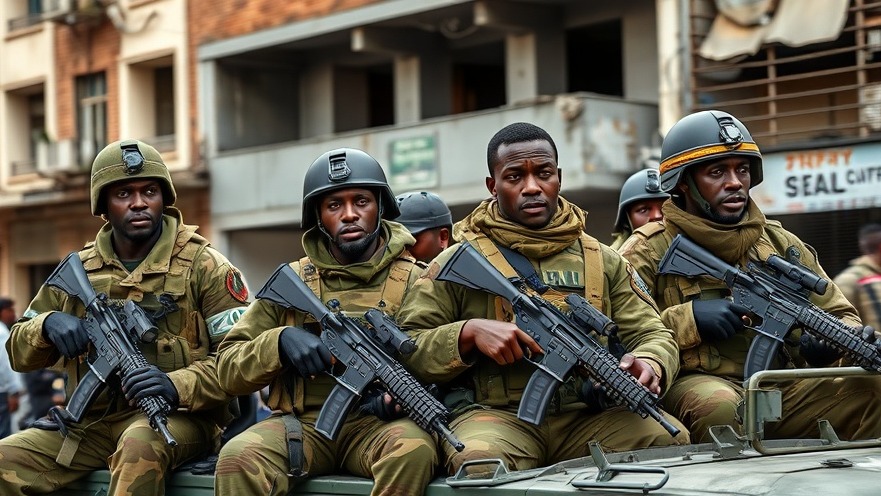
Sudanese conflict soldiers in modern gear on a military vehicle, reflecting the refugee crisis.


Unraveling the Crisis: The Sudanese War’s Dire Human Cost

In recent years, Sudan has claimed a grim spot on the world's agenda, marked by a brutal power struggle that echoes through the lives of millions. The conflict between the Sudanese army and rival paramilitary groups has not only torn apart the fabric of the nation, but it has also brought the rich oil-laden regions, like Corden, to the forefront of humanitarian concern. With renewed attacks resulting in hundreds of civilian casualties earlier this month, the urgency to comprehend the implications is palpable. The country is now in a state of chaos, yet the human stories behind these tragedies often remain overshadowed by political narratives.


In 'Sudan’s Civil War Sparks Deepening Humanitarian Crisis,' the discussion highlights the substantial humanitarian toll of the ongoing conflict, prompting an analysis of its implications for the future.

The Growing Humanitarian Catastrophe

Despite being one of Africa's wealthiest countries in natural resources, Sudan's humanitarian crisis is dire. Recent reports indicate that over half of its population—approximately 25 million people—are at risk of starvation. This shocking figure stems from the ongoing violence that has claimed around 150,000 lives, with hundreds of thousands fleeing to neighboring Chad, predominantly women and children. The deteriorating health and education systems further exacerbate the situation, leaving many without basic necessities or hope for the future.

Civilians in the Crossfire

The nature of the conflict is increasingly brutal and complex, with ethnic dimensions complicating the reality on the ground. Civilians are routinely caught in the crossfire, with the current protection frameworks being deemed inadequate. The UNHCR has sounded alarms over the crisis, emphasizing the colossal deficit in civilian protection, which loses sight of those most affected—ordinary Sudanese people. As fighting escalates, particularly in the Corden region, the looming question remains: what will it take for the international community to respond more robustly?

Global Impact and Future Predictions

This conflict extends beyond the borders of Sudan, impacting regional stability and international relations. As more refugees pour into neighboring countries, there are significant implications for humanitarian aid and cooperation between states in the region. Experts predict a long-term humanitarian crisis if the fighting persists, potentially forcing international bodies like the UN to intervene more forcefully. Considering how interconnected global challenges such as migration and instability are, the international community must remain vigilant and proactive.

Understanding the Ethnic Dimensions

The ethnic strife emerging from Sudan’s war adds a complex layer to the analysis of the conflict. An understanding of the varied ethnic groups within Sudan—along with their historical grievances—provides essential context to why the violence continues unabated. As different factions vie for power, the repercussions often fall hardest on marginalized groups, sparking conflict that can last for generations. This complexity necessitates recognition and tailored strategies for peace-building efforts that engage these communities, rather than simply imposing top-down solutions.

Concluding Thoughts: A Call for Collective Action

The ongoing humanitarian crisis in Sudan stands as a striking reminder of the dire need for international solidarity in addressing such multisided conflicts. As citizens of the global community, there is a responsibility to remain informed and to push for initiatives that foster sustained peace and recovery. Advocacy for Sudan must go beyond mere acknowledgment; it requires tangible actions and solutions that prioritize human lives over political agendas. The urgency for intervention grows more crucial as civilian suffering deepens, demanding a unified response from both regional and global actors.

As we reflect on the deepening humanitarian crisis in Sudan, it is imperative that we consider not only the immediate needs of the affected populations but also the long-term structural changes necessary to end such protracted conflicts. Engaging in dialogues and pushing for actionable strategies will be key in steering Sudan towards a path of recovery and resilience.


Intracontinental Currents

8 Views

0 Comments

Write A Comment

*
*
Related Posts All Posts

How New Campus Buses Are Transforming KIU Student Life

Update The Relief of Transport Woes: A New Era for KIU Students Students at Kashim Ibrahim University (KIU) in Borno State are experiencing newfound relief as the state government addresses long-standing transportation challenges that have hindered their academic pursuits. Following a critical report by News Central that spotlighted the everyday struggles faced by students and lecturers due to insufficient transport facilities, the government has stepped in by delivering several new campus buses. This timely intervention is anticipated to transform the commuting landscape for many students, all of whom play vital roles in the educational ecosystem.In Relief for KIU Students as Borno Govt Provides New Campus Buses, the focus is on transportation challenges and how improvements can enhance academic productivity. Context Deepens Understanding of Transport Challenges The transportation crisis detailed within the educational landscape of Borno State isn’t merely an administrative oversight; it’s a reflection of broader systemic issues affecting the academic prowess of institutions across Africa. For students at KIU, inadequate transport has meant navigating lengthy treks to classes, resulting in tardiness and diminished academic performance. Such condition lays bare the urgent need for improvements in public transport systems surrounding educational facilities. Ensuring reliable and safe transportation gates the path to an enriched learning experience, countering the adverse impacts that disruptions can create in students’ lives. Direct Benefits For Student Productivity The introduction of additional buses to KIU is expected to yield several significant benefits. Many students have noted that improved transportation will contribute positively to their punctuality, consequently fostering an environment of discipline and productivity. Furthermore, reliable transportation enhances safety for both students and staff, providing peace of mind that was previously compromised. With these buses, students can now focus on their studies rather than worrying about the logistics of getting to campus. Amplifying Voices: The Community Response Umaru Kirawa, reporting for News Central, highlighted the university community’s appreciation for the government’s initiative. Here are some perspectives: Ibrahim Musa, a final-year student, remarked, "This intervention shows that our voices matter. We are thankful that the government has taken our plight seriously. It will not only assist us in reaching our lectures but will enhance our overall academic productivity.” Dr. Fatima Yalwa, a lecturer at the university, echoed these sentiments. "On-time attendance is essential for effective teaching. The new bus schedule can facilitate better interaction between students and educators, ultimately enhancing the learning environment.” The responses highlight a broader movement towards effective governance that isn’t just about policy-making but actualization of citizens' needs. Current Events' Connection: Transport Reforms Across Africa KIU's bus intervention is a microcosm of a larger trend across the African continent whereby educational institutions are advocating for better infrastructure and governance. Several nations are now mobilizing resources to establish frameworks facilitating academic pursuits through improved public services. As governments recognize the value of education in national development, investments in student infrastructure have become increasingly paramount. Ensuring Sustainability: The Need for Continued Advocacy While the introduction of these buses is commendable, the solution’s sustainability remains under scrutiny. Educational advocates urge the Borno State Government and other governments across the continent to prioritize consistent transport funding and maintenance to protect students’ investments in education. Just as vital as the provision of transport is the commitment to its ongoing operational success, ensuring that these lifesaving mechanisms remain functional for years to come. In summary, this modern intervention addresses both logistical and psychological barriers that students at KIU have faced, paving the way for a more conducive learning environment. The Borno State Government’s action is more than just a response; it is a progressive step towards sustainable education and better governance. Building on this momentum, there is hope that these improvements can inspire other regions to take similar actions. As we look to the future, the dialogue surrounding transportation and education reforms must endure. It is essential for community members, educational institutions, and government officials to stay invested in the discourse to create a robust framework for addressing more systemic issues affecting students across Africa.

Vote-Buying in Nigeria: A Deep Dive into Electoral Integrity Challenges

Update The Critical Challenge of Vote-Buying in Nigeria’s Democracy The recent comments from former Labour Party presidential candidate Peter Obi have sparked an intense debate about the integrity of democracy in Nigeria. His criticism of the House of Representatives for rejecting measures aimed at criminalising vote-buying during party primaries reveals profound concerns regarding the fundamentals of electoral democracy in the country. As Obi articulates, allowing monetary incentives to dictate the voting process corrupts the very essence of democracy, leading to a cycle of compromised leadership and governance failures.In Peter Obi Faults Reps Over Vote-Buying at Party Primaries, the conversation surrounding electoral integrity unfolds, prompting us to examine the broader implications of this critical issue. Understanding the Implications of Electoral Corruption Vote-buying is not just a problem limited to Nigeria; it affects democratic processes across varying global contexts. The House’s refusal to act against such practices blindsides efforts to encourage political accountability and strengthens the perception that elections can be manipulated. By undermining grassroots participation, Nigeria risks solidifying a culture where votes are treated as commodities, thus degrading the electoral process. This commodification leads to qualified candidates being sidelined in favour of those with monetary backing, eroding public trust in governance and political mechanisms. Exploring the Resistance from Lawmakers The resistance from lawmakers to implement reforms targeting vote-buying is perplexing. Political analyst Taiwo Olapade suggests that entrenched party interests and the desire for immediate electoral success can conflict with long-term democratic integrity. If lawmakers feel that eliminating vote-buying will threaten their existing power dynamics and electoral strategies, they may be resistant to making necessary changes. This creates a paradox where the very leaders entrusted to safeguard democracy become its greatest adversaries, perpetuating a cycle of corruption. Lessons from Other Democracies Looking beyond Nigeria, various countries have confronted the challenge of electoral corruption with a mix of policy reforms and advocacy from civil society. For instance, nations like Canada and South Korea have strengthened their electoral commission’s powers to monitor and enforce strict campaign finance regulations. These examples demonstrate that even entrenched political cultures can be shifted with proper oversight and public engagement, providing a blueprint that Nigeria could follow to restore integrity to its electoral framework. The Effect on Candidate Quality and Leadership Vote-buying at the party primaries not only compromises the operators of the election itself, but it also directly impacts the quality of leadership that will eventually emerge. When candidates are selected based on their financial resources rather than their capabilities and popularity, the resultant governance is often less responsive to the public's needs. Citizens then face the ramifications of this detrimental cycle in their everyday lives, from inadequate public services to a lack of accountability from their elected representatives. A Call for Reform and Action To combat vote-buying effectively, it is imperative that Nigeria embarks on a serious reform journey. Stakeholders, including political parties, civil society, and citizens, must unite to advocate for laws that impose strong penalties on vote-buying practices. Robust measures should include transparent campaign financing laws, educational campaigns about the dangers of electoral corruption, and an empowered electoral commission dedicated to monitoring compliance. Engaging Youth in Revitalising Democracy The youth of Nigeria hold the potential to be the vanguard of a renewed democratic culture. Engaging them in discussions about the value of their votes and the impact of electoral integrity is crucial. Their digital savvy can transform traditional campaigning practices and enable greater transparency. Initiatives that encourage young people to not only vote but actively participate in political processes can ultimately reshape the political landscape. In summary, the rejection of reforms to tackle vote-buying as highlighted in Peter Obi Faults Reps Over Vote-Buying at Party Primaries is a wakeup call for Nigeria to reflect on the health of its democracy. It presents an opportunity to galvanise support from various sectors of society towards the implementation of effective legislation that prioritises democratic integrity. As we reflect on these insights, it becomes clear that a proactive stance is needed to approach the current political climate. Interested individuals and organisations should actively engage in dialogues about reform and drive initiatives that confront the issues highlighted. Advocating for transparency, accountability, and genuine democratic values is essential for the future of governance in Nigeria.

Fire Breaks Out at FIRS Office in Abuja: Implications for Public Safety

Update Abuja Offices Battled by Fire: The Incident at FIRS A fire engulfed the Federal Inland Revenue Service (FIRS) office in Abuja today, causing significant destruction and raising concerns about the efficiency of emergency response measures in Nigeria's capital. The blaze reportedly started during the early hours, quickly spreading due to the building's design and materials, indicating potential risks that have yet to be adequately addressed by building codes and safety regulations.In 'Fire Breaks Out at FIRS Office in Abuja,' the incident illuminates pressing concerns about public safety and governmental preparedness in response to emergencies. Emergency Responses and Public Safety: A Call for Improvement The swift response from local fire services was commendable but the damage inflicted calls into question the preparedness and resistance of government structures against such incidents. As taxpayers, citizens expect accountability and support from governmental institutions that hold their financial and personal data. Hence, it is crucial to probe the existing infrastructure's resilience and fire safety protocols deployed in government buildings. The Cultural Ramifications of Governance and Response Events like this spotlights a persistent narrative in Nigerian governance: the need for systemic improvements, particularly in handling emergencies that could threaten public safety. This incident reverberates through societal confidence in government institutions, emphasizing a vital intersection of governance and public responsibility. It could spawn movements advocating for stricter building codes and safety measures across the board. Future Predictions for Government Facilities In light of the increasing frequency of similar incidents, future predictions point towards an urgent need for reform within Nigeria's emergency preparedness framework. Policymakers may need to introduce mandated safety assessments and regular audits on fire safety technology in all government buildings. Such actions would not only assure the public of their safety but would improve trust in governmental processes. Practical Insights and Recommendations for Citizens This incident can serve as a poignant reminder for citizens to actively engage in discussions about public safety protocols. Residents are encouraged to advocate for transparency and regular updates from local authorities concerning any overdue safety regulations or assessments, particularly in public infrastructure that houses sensitive data. Moreover, the broad impact of this fire highlights the necessity for community awareness programs focusing on emergency response. Engaging citizens in understanding evacuation procedures and encouraging them to familiarize themselves with local emergency services could enhance survival rates in the event of unforeseen incidents. Conclusion The FIRS fire incident is not just a localized tragedy; it amplifies the broader issues of infrastructural safety, governance, and emergency preparedness throughout Nigeria. It is a voice for urgent improvements in system efficiency to safeguard against future calamities. As citizens reflect on their role, there is an opportunity for collective action to spur necessary changes for greater accountability and safety. It remains vital for governmental bodies to remain proactive rather than reactive, ensuring all steps are taken to protect lives and instill confidence among the populace.

Terms of Service

Privacy Policy

Core Modal Title

Sorry, no results found

You Might Find These Articles Interesting

T
Please Check Your Email
We Will Be Following Up Shortly
*
*
*