Add Row
Add Element
Add Element
  • Channel
    • VIRTUAL EVENTS BILLBOARD
    • CONFERENCES & CONVENTIONS
  • Featured
    • THE VORTEX VISIONARY VIEW
    • African Changemakers
    • Future of Africa
    • Sustainable Africa
    • Women Vortex
    • Vortex Global Pulse
    • Habitat Trails
    • InterContinental Issues
    • Intracontinental Currents
    • #FUTURE FEATURE INVITATION
August 20.2025
3 Minutes Read

Understanding Africa's True Size: The Push for Correcting Maps

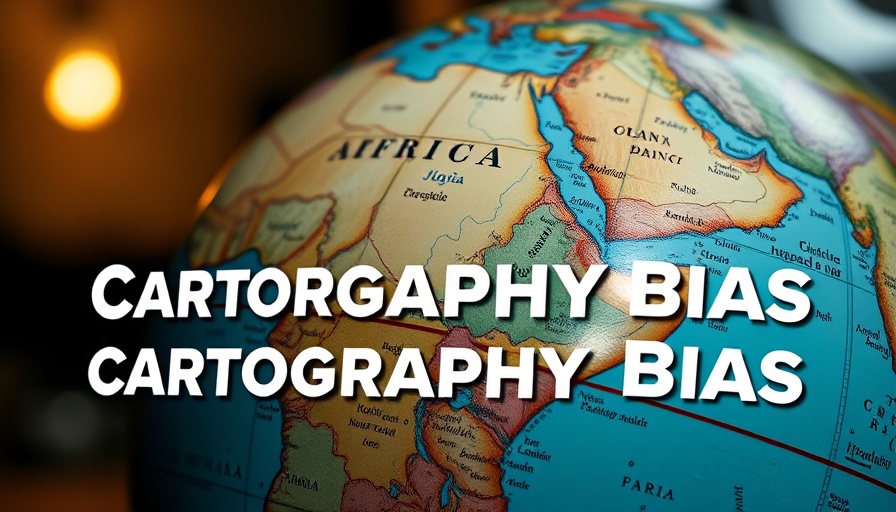
Correct the map Africa campaign highlighting cartography bias.

Mapping the Future: Why Africa Needs an Accurate Representation

The push to correct the map signifies a pivotal moment in how the world perceives Africa, the second-largest continent, not just in geographical terms but socio-economically as well. The African Union (AU) has endorsed this campaign, advocating for the increased use of the Equal Earth projection over the long-standing Mercator map that distorts the true size of the continent. This shift is not merely technical; it is deeply rooted in the desire to challenge colonial narratives that have persisted for centuries.

In AU Pushes ‘Correct the Map’ Campaign to Show Africa’s True Size, the discussion dives into Africa's campaign to overhaul outdated mapping perceptions, exploring key insights that sparked deeper analysis on our end.

Understanding Mercator's Legacy

The issues with the Mercator projection, which has been in use for about 450 years, manifest in the disproportionate representation of Africa. With a size of approximately 30.3 million square kilometers, Africa is roughly 14 times larger than Greenland, yet the Mercator projection compresses it, skewing perceptions and reinforcing outdated colonial stereotypes. This misrepresentation extends beyond geography; it influences political, economic, and social perceptions of the African continent, undermining its importance on a global scale.

Revolutionizing Perspectives: The Equal Earth Advantage

The Equal Earth projection stands out for its equitable representation of all continents, avoiding the distortions that accompany other projections. According to Dr. Victor Maribbu from Africa No Filter, the shift is not about inflating Africa's size but about ensuring that its representation aligns with its actual scale. This approach positions Africa accurately within global narratives and challenges existing biases that have influenced long-standing misconceptions about the continent.

Why Now? The Timing of the Campaign

As the AU formally endorses this campaign, there are real implications for policy-making and educational resources across Africa. With increasing awareness through media and public outreach, the campaign seeks to dismantle centuries of misinformation. The initiative is particularly vital for younger generations who should not inherit a distorted view of their own continent, as highlighted by Dr. Maribbu.

Driving Change in Educational Institutions

For the campaign to succeed, active collaboration with schools, governments, and tech platforms is essential. Dr. Maribbu emphasizes the need for awareness and retraining of educators to adopt the Equal Earth projection in their curricula. This change requires a deliberate roadmap—an initiative that weaves together financial, institutional, and educational resources to facilitate the transition.

The Role of Media in Fuelling the Movement

Amidst the campaign's growing momentum, media plays an integral role not only in raising awareness but also in shaping the dialogue around Africa's representation. Engaging global media outlets in discussions surrounding the “correct the map” campaign can create a ripple effect on public perception and institutional attitudes toward accurate representations.

Overcoming Resistance and Challenges

Despite the momentum, skepticism remains. Some argue that changing the map projection could confuse students learning about navigation and coordinates. However, as Dr. Maribbu elaborates, any resistance to change is often a part of progress. Historical precedents show that societies have successfully shifted their narratives to reflect new understanding, and this can be achieved with the Equal Earth projection as well.

A Collective Responsibility

The “correct the map” initiative urges not only government bodies but all stakeholders, including international organasations like the UN and World Bank, to reassess their geographical narratives. Africa's representation on world maps is intertwined with economic and political significance. Addressing this issue can help redefine narratives and leads to informed decision-making both within and outside of the continent.

As African representation expands through accurate mapping, a critical dialogue emerges on how to address colonial legacies and false narratives. The conversation surrounding the use of the Equal Earth projection is not only about geography; it symbolizes a broader movement toward equity and recognition of Africa's contributions to the global community.

To stay informed about the ongoing developments in Africa's mapping discourse and the broader implications for representation and identity, join local discussions, engage in social media campaigns, and support initiatives like the “correct the map” campaign. Together, we can shape a narrative that truly reflects Africa's significance on the global stage.

Intracontinental Currents

2 Views

0 Comments

Write A Comment

*
*
Related Posts All Posts

Rivers State Initiates Impeachment of Governor Fubara: Key Insights

Update Rivers State Impeachment Proceedings: What You Need to Know Impeachment proceedings have officially commenced in Rivers State, Nigeria, marking a significant moment in the local political landscape. The House of Assembly has formally issued notices of alleged gross misconduct against Governor Siminalayi Fubara and his deputy, stirring a whirlwind of controversies that could shape the future of governance in the region. This revolt against governance is not merely procedural; it reflects deep-seated frustrations among legislators regarding the executive's perceived failures.In 'Rivers Assembly Begins Impeachment Process Against Governor Fubara', the discussion dives into pressing issues of accountability and governance, sparking deeper analysis on our end. The Charges Against Governor Fubara: A Detailed Examination In a session held on Thursday, lawmakers cited multiple grave accusations against Governor Fubara, rooted in Section 188 of the 1999 Constitution. The allegations include a failure to present the state budget timely, unauthorized expenditure, withholding salaries, bypassing the constitutional screening process for appointments, and even the demolition of the Assembly complex itself. Such serious charges raise pressing questions about accountability and transparency in governance. The Underlying Political Climate: An Opportunity for Change? The move towards impeachment reflects broader political tensions in Nigeria. With 26 lawmakers supporting the proceedings, the Speaker of the Assembly indicated that the notices would be served within seven days, initiating a constitutional journey that could eventually lead to Governor Fubara’s removal. This scenario echoes sentiments of political discontent that have proliferated across various states in Nigeria, underscoring the necessity for governmental accountability and effective governance. The Path Ahead: Constitutional Processes and Implications As the impeachment process unfurls, the potential outcomes could reshape not only Fubara's political career but also the overall landscape of governance in Rivers State. The constitutional process governing impeachment is rigorous, intended to ensure fairness and transparency. If the Assembly successfully navigates this journey and concludes with a vote of no confidence, it could set a precedent and prompt similar movements in other states. Political analysts speculate that a successful impeachment could invigorate the calls for reforms among citizens, empowering them to demand a more responsive government. Voices in the Conversation: Experts Weigh In The discussion surrounding the impeachment proceedings has attracted a cadre of legal and political analysts. Notable voices like Abiye Hector-Gome, Todimu Ige, and Eze Onyekpere, each bring their expertise to the table, shedding light on the legalities and ethical dimensions of the charges against the governor. They argue that this situation could serve as a critical juncture for the Nigerian political system, highlighting the necessity for citizens to remain engaged in the political process. Constitutional Law Insights: The Mechanics of Impeachment Impeachment is not only an act of political maneuvering but a constitutional mechanism intended to safeguard democracy. The process involves detailed procedures as outlined in the 1999 Constitution, including investigations into the charges brought against the public official. As the Rivers House of Assembly embarks on this journey, understanding the procedural aspects can illuminate the significance of such political actions for democracy in Nigeria and across the broader African continent. Broader Implications for Governance in Nigeria The events unfolding in Rivers State are symbolic of a larger trend affecting governance across Nigeria. As citizens become increasingly aware of their rights, the demand for accountability is growing stronger. This impeachment could signify a turning point for political engagement, illustrating that elected officials cannot escape scrutiny. For the citizens of Rivers State and beyond, this moment serves as a reminder of the power embedded within democratic participation. In summary, the ongoing impeachment proceedings against Governor Siminalayi Fubara represent a critical moment in Nigeria's political narrative. As the country grapples with challenges of governance and accountability, the actions taken by the Rivers State House of Assembly could resonate throughout the region. The implications of these actions stretch beyond the immediate political landscape, emphasizing the importance of civic engagement and political reform in shaping a better future for Nigeria.

Super Eagles Touch Down in Marrakech: What This Clash with Algeria Means for Nigeria's Football Future

Update The Super Eagles: A Team Poised for Success in Marrakech The Nigerian national football team, known as the Super Eagles, has recently touched down in Marrakech, Morocco, setting the scene for their highly anticipated clash against Algeria. This match has significant implications, not only on the field but also for the sentiment of Nigerian football fans who are yearning for a resurgence in their national team's fortunes.In 'Super Eagles Touch Down in Marrakech for Algeria Clash!', the discussion dives into the critical match between Nigeria and Algeria, exploring key insights that sparked deeper analysis on our end. The Significance of the Algeria Match This upcoming match is more than just another game; it's a statement. The Super Eagles have faced challenges in maintaining their prestigious status within African football over the past few years. An encounter with Algeria, a historical rival, presents an opportunity for redemption and a strategic step in revitalizing Nigeria’s national pride in football. Analysts predict that a win could provide a crucial morale boost, galvanizing the team and fans alike. Cultural Impact of Football on the African Continent In Africa, football is more than a sport; it is a cultural phenomenon that unites diverse populations. Events like the upcoming match not only captivate sports enthusiasts but also serve as a canvas reflecting the socio-political landscape of the continent. The Super Eagles' performance is intertwined with national identity and pride, making their culinary significance transcend beyond mere scores and statistics. A Historical Context: Nigerian Football and Its Rivals Historically, Nigeria and Algeria have had a competitive rivalry, often bearing significant cultural weight in their confrontations on the field. Key moments, such as the infamous matches during the African Cup of Nations, showcase the drama and passion inherent in these encounters. The cultural narratives surrounding these rivalries shape the perceptions of not just the game itself but also the nations represented. Fans Await: The Emotional Weight of National Pride The emotional investment of Nigerian fans adds another layer to the upcoming match. For many, football symbolizes not just a game but a communal experience where dreams and aspirations converge. Social media platforms and fan forums buzz with analyses, speculations, and unwavering support, demonstrating the rich tapestry of fan culture that exists in contemporary African soccer. As the match approaches, you can feel the anticipation and anxiety rising—it's not merely about victory but restoring a sense of hope in national identity. The Path Ahead for the Super Eagles Recent assessments of the Super Eagles indicate a blend of both youth and experience, which could be critical as they face off against Algeria. Head coach’s tactics—blending defensive rigor with attacking flair—could be pivotal in determining the outcome of the match. How well the younger players adapt to high-pressure situations against formidable opponents like Algeria will not just define this match, but also lay down the foundation for Nigeria's future successes or setbacks in African football. As the Eagles prepare for their flight, Nigerians watch closely, hoping for a game that will inspire, unite, and rejuvenate their collective footballing spirit.

Nigerian Doctors Plan Strike: Unmet Demands Threaten Healthcare Crisis

Update The Looming Crisis: Nigerian Doctors on StrikeIn a bold move anticipated to impact Nigeria's beleaguered healthcare system, doctors across the nation are preparing for a strike due to unmet demands concerning pay, working conditions, and insufficient healthcare resources. The Nigerian Medical Association (NMA) has indicated that despite repeated negotiations with the government, promises for reforms have not materialized, worsening the already dire situation for both practitioners and patients alike.In 'Nigerian Doctors Plan Strike Over Unmet Demands, Healthcare Crisis Looms', the discussion dives into the critical situation surrounding Nigeria's healthcare system, exploring key insights that sparked deeper analysis on our end. Historical Context: Healthcare in NigeriaNigeria’s healthcare system has grappled with chronic underfunding and an overwhelming lack of resources for decades. While the government has pledged to increase national health expenditure, actual allocations often fall short of commitments. Doctors remain overworked and underpaid, creating ripe conditions for discontent within the medical community. In this environment, the impending strike serves as both a catalyst for immediate change and a reflection of long-standing grievances.Impact on Public Health: A Potential CatastropheThe ramifications of a nationwide doctors' strike are profound. Already, access to healthcare services in Nigeria is limited—only a small fraction of the population can conveniently access quality medical care. With hospitals potentially becoming overwhelmed during the strike, the risk of preventable deaths and worsening health conditions increases drastically. Grassroots organizations and citizens fear that the strike could lead to an acute healthcare crisis unless the government responds swiftly to doctors' demands.International Perspectives: How Situation Mirrors Global TrendsThis situation is not unique to Nigeria. Across the globe, healthcare professionals are increasingly vocal about their dissatisfaction with working conditions and pay, leading to strikes in countries as varied as the USA, the UK, and Canada. As nations grapple with the lasting impacts of the COVID-19 pandemic, many healthcare systems struggle to retain staff, leading to a cycle of strikes and unrest. The parallels drawn from these incidents highlight a global need for systemic changes in how healthcare workers are recognized and compensated.The Other Side: Government's Response and CounterargumentsWhile the doctors raise legitimate concerns, the Nigerian government emphasizes budget constraints and the dire economic conditions faced by the country. Officials assert that any increase in healthcare spending must be balanced against national interests, including infrastructure and security. However, many citizens and healthcare professionals argue that without addressing healthcare needs, the long-term effects could cripple the nation further.Future Outlook: What Lies Ahead for Nigerians?The future of healthcare in Nigeria hangs in the balance. The outcome of this strike could set a precedent for future negotiations and reforms within the country’s healthcare system. Observers suggest that unless substantive steps are taken now to honor the commitments made to healthcare workers, Nigeria risks not only declining health outcomes but also a deterioration in confidence in governmental capabilities.Actionable Insights for CitizensDuring this tumultuous period, it is crucial for citizens to stay informed about developments related to the healthcare strike. Engaging with local health advocacy groups, participating in community discussions, and demanding accountability from public officials can empower individuals to play a proactive role in shaping the future of healthcare in Nigeria.

Terms of Service

Privacy Policy

Core Modal Title

Sorry, no results found

You Might Find These Articles Interesting

T
Please Check Your Email
We Will Be Following Up Shortly
*
*
*