Add Row
Add Element
Add Element
  • Channel
    • VIRTUAL EVENTS BILLBOARD
    • CONFERENCES & CONVENTIONS
  • Featured
    • THE VORTEX VISIONARY VIEW
    • African Changemakers
    • Future of Africa
    • Sustainable Africa
    • Women Vortex
    • Vortex Global Pulse
    • Habitat Trails
    • InterContinental Issues
    • Intracontinental Currents
    • #FUTURE FEATURE INVITATION
May 30.2025
2 Minutes Read

Analyzing Tinubu's Two-Year Mid-Term Scorecard: Key Achievements and Challenges

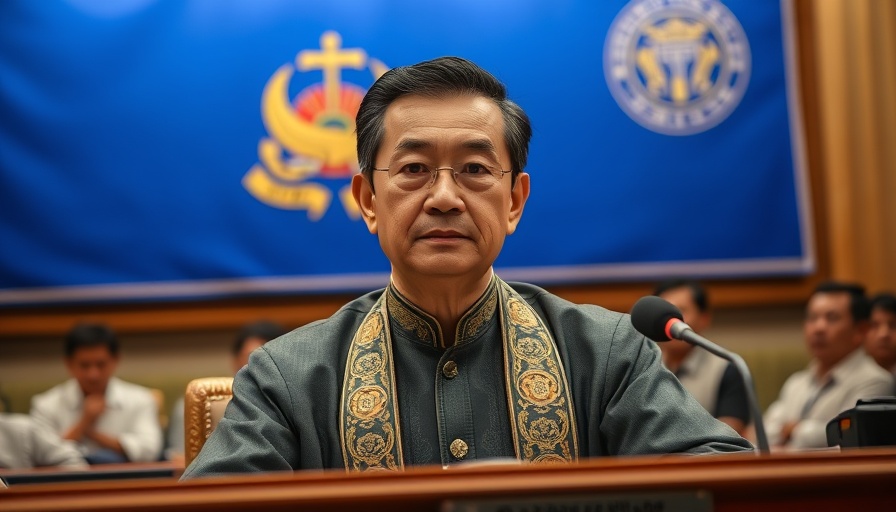
President Tinubu's Mid-Term Scorecard event with distinguished figure in formal setting.

Evaluating President Tinubu's Governance: An Overview

As President Bola Ahmed Tinubu completes two years in office, a closer examination reveals a mixed scorecard reflecting both strides and setbacks in governance. His tenure has been marked by significant reforms, but also by persistent challenges that hint at broader systemic issues within Nigeria's political infrastructure. Understanding these dynamics is crucial as they resonate not only within Nigeria but across the African continent.

In 'Two Years in Office: President Tinubu's Mid-Term Scorecard', the discussion dives into Nigeria's evolving political landscape, exploring key insights that sparked deeper analysis on our end.

Key Achievements: Progress Amidst Challenges

President Tinubu has initiated various reform policies aimed at revitalizing Nigeria's economy, enhancing security, and improving public service delivery. His administration's focus on attracting foreign investment has been particularly evident, with various initiatives aimed at stabilizing the naira and facilitating trade. These economic reforms, if successfully implemented, could set a precedent and serve as a model for other nations within the Africa continent aiming to rejuvenate their economies.

Security Concerns: The Ongoing Battle

Despite these achievements, security remains a paramount issue. Nigeria continues to grapple with terrorism, banditry, and civil unrest. Tinubu's administration has been criticized for its handling of these crises, particularly in the northeastern region, where military response efforts against Boko Haram have been met with controversy. This ongoing struggle highlights the need for cohesive national security strategies that not only address symptoms but also focus on their root causes.

Public Perception: A Divided Nation

Public sentiment towards Tinubu’s leadership is astoundingly polarized. Many citizens express skepticism about the effectiveness of his governance, citing persistent inflation, rising unemployment rates, and a declining standard of living as indicators of his administration's shortcomings. On the other hand, there are proponents who laud his efforts to repair Nigeria's infrastructure and promote economic growth, suggesting that time is required for the long-term benefits to materialize.

The Path Forward: Opportunities and Recommendations

Looking ahead, President Tinubu faces the dual challenge of improving public trust while navigating economic reforms. A transparent dialogue involving all stakeholders, including civil society and opposition parties, could foster a more unified approach to governance. Moreover, future policies should focus on socio-economic equity, recognizing the diverse realities faced by Nigerians from different regions and backgrounds.

Conclusion: What Lies Ahead for Nigeria?

The assessment of President Tinubu’s mid-term scorecard reveals an administration attempting to carve a path amidst historical complexities. As Nigeria stands at a crossroads, the implications of Tinubu's decisions will resonate far beyond its borders, significantly influencing the narrative of governance and democracy across the African continent. Engaging in critical discourse about his policies and their impacts is essential for fostering an informed citizenry that can actively participate in shaping the nation's future.

Intracontinental Currents

11 Views

0 Comments

Write A Comment

*
*
Related Posts All Posts

Exploring Angola’s Colonial Past to Understand Its Continental Influence

Update From Colonization to Independence: A Historical Overview of Angola Angola's path from its early encounters with Portuguese colonizers in the 16th century to its modern-day prominence is a profound narrative woven into the broader tapestry of African history. Initially, the Portuguese, in their search for a trade route to India, stumbled upon Angola which marked the beginning of a grim chapter characterized by the exploitation and forced labor of its people. The slave trade, with an estimated 1 million Angolans being deported to Brazil, exemplified the destruction wrought by colonial ambitions. Leaders like Queen Nzinga became symbols of resistance against this foreign domination, highlighting a heritage of resilience among the Angolan people.In Angola’s Long Road from Colonialism to Continental Influence, the discussion dives into Angola's unique history and journey towards its current influence, prompting a deeper analysis here. The Struggle for Independence: A Narrative of Resilience The mid-20th century marked a pivotal moment for Angola as the winds of independence swept across Africa. The Portuguese colonial regime was notably fragile compared to other colonial powers, a fact that fueled the independence movement. The emergence of key figures such as Agostinho Neto and Holden Roberto in the 1960s galvanized the struggle against colonial rule. The complexities of this struggle were further heightened by internal divisions and Cold War dynamics, with the country effectively becoming a battleground for superpower interests as both the United States and the Soviet Union sought to exert influence. Analyzing the Civil War: Foreign Engagement and its Consequences The civil war that erupted following Angola's independence in 1975 was a direct consequence of these geopolitical tensions. The MPLA, initially led by Neto, found support from the Soviet Union and Cuba, while UNITA and FNLA were backed by the U.S. and South Africa. This conflict not only devastated Angola but also contributed to a prolonged crisis that kept the country in turmoil until 2002. The tragic circumstances surrounding leaders such as Jonas Savimbi, who fell victim to the ongoing violence, illustrate the profound human cost of these struggles. The Shifting Landscape: From War to Governance In the aftermath of the civil war, under the leadership of José Eduardo dos Santos, Angola began to emerge from the shadows of its past. The discovery of vast oil reserves attracted foreign investment, particularly from the West, facilitating economic recovery. However, the legacy of conflict remains, with significant disparities persisting between urban and rural areas. Angola's political landscape has transformed into a multi-party system, yet challenges to governance and social equity remain pertinent issues that define the country's trajectory. Angola’s Role on the African Continent: Leadership and Influence Fast-forwarding to the present day, like in the video titled Angola’s Long Road from Colonialism to Continental Influence, Angola's ascendancy in continental politics has taken center stage. With João Lourenço's election as the chair of the African Union, Angola is carving out a nuanced role in continental governance. This evolving influence is critical, with the country poised to leverage its historical experiences as a cautionary tale for other nations grappling with similar post-colonial dilemmas. The hope is that Angola's journey can inspire collaborative solutions among African nations to address shared challenges. Lessons from Angola: Navigating Future Challenges As Angola moves forward, lessons from its colonial past and civil war present unique opportunities for reflection and action. The importance of regional cooperation and bolstering intra-African ties cannot be overstated, especially as the continent faces significant socio-economic hurdles. Angola's role as a vibrant actor in this sphere encourages optimism regarding the future of the African continent amidst complex global challenges. Angola's journey from a colonial past to a leading role on the African stage exemplifies the potential for transformative change rooted in resilience and adaptability. As we observe Angola's progress, there are valuable insights that can guide other nations navigating similar paths—especially the understanding that superpowers often act in their self-interest, necessitating careful management of international relationships.

Understanding Boko Haram's Evolution: A Deep Dive into Terrorism in Africa

Update Tracing the Violent Evolution of Boko Haram Boko Haram, the infamous armed group primarily known for its insidious acts of terror across Nigeria and beyond, has deep and complex roots that go back more than four decades. Initially founded as a response to perceived threats from Western civilization, Boko Haram's metamorphosis into a terror group underscores not only the unsettling reality of violent extremism in Africa but also the constellation of political, economic, and social factors fueling its persistence.In From Chibok to the Sahel: Why Boko Haram Has Not Been Defeated, the discussion dives into the intricate origins and evolution of Boko Haram, prompting us to analyze how these issues shape the current security landscape in Africa. Historical Context: From Insalah to Insurgence The inception of Boko Haram can be traced back to the establishment of the Insalah Movement in 1978, founded by Malam Idris in Jos, Nigeria. This organization laid the groundwork for what was to become an extreme ideology aiming to resist Western influences in northeastern Nigeria. In 2002, Muhammad Yusuf further crystallized this ideology by forming Boko Haram, which formally declared war on what they viewed as corrupting Western influences on Islam. The radicalization of youth among the Canori ethnic group was a pivotal aspect of Boko Haram's early days as they sought to insulate their community from the perceived afflictions of modernity. With Yusuf's death during a government crackdown in 2009, the organization shifted dramatically under Abu Bakr Shekau, who instigated a more violent approach, marking Boko Haram’s transition from a religious movement to a full-fledged terrorist organization. The Unfolding of Terror: The Chibok Abductions The 2014 abduction of 276 schoolgirls from Chibok stands out as a watershed moment that brought Boko Haram into the global spotlight and highlighted its extreme transformation. This audacious act was not merely about seizing hostages; it was a sinister statement of intent and a stark revelation that the group had abandoned its foundational ideologues to embrace violent criminality. The girls, many of whom remain missing, symbolize the ongoing humanitarian crisis wrought by Boko Haram's actions and underscore the international community's urgency to respond to the terrorism plaguing the Sahel region. Socioeconomic Underpinnings: The Breeding Grounds of Extremism Understanding the persistence of Boko Haram also requires an exploration of the socioeconomic challenges facing the region. Persistent poverty and unemployment create fertile ground for recruitment into militant groups. As Nigeria grapples with economic stagnation heightened by dwindling resources in the Lake Chad basin, Boko Haram has exploited the disenfranchisement of young Nigerians, who are increasingly finding themselves attracted to the group’s narrative of absolute resistance against an oppressive state. The Political Dynamics of Boko Haram The political landscape in Nigeria is fraught with complexities that have aided Boko Haram's survival. Allegations suggest that elements within political and military structures may share sympathies with Boko Haram's Islamic goals, making it difficult to mount an effective response against the group. This intersection of power and extremism further complicates the fight against Boko Haram, perpetuating a cycle of violence and governance failure that fuels the ongoing insurgency. A Fragmented Front: The Internal Divisions within Boko Haram Since its inception, Boko Haram has split into various factions, with some pledging allegiance to ISIS. This fragmentation has not only stirred internal conflicts but has also contributed to further chaos in the region. As these factions vie for legitimacy and control, civilians are increasingly caught in the crossfire, illustrating how Boko Haram's evolution has created a chaotic environment that extends far beyond its initial geographic limits. Future Predictions: The Ongoing Battle As the current Nigerian government continues to proclaim the eradication of Boko Haram as a priority, the conflict remains unresolved. The group's persistent ability to adapt and exploit various societal weaknesses denotes a grim reality for the Sahel region. Anti-terrorism measures must evolve in tandem with the multifaceted nature of the threats posed by Boko Haram to ensure a comprehensive and sustainable resolution. This ongoing crisis compels not only regional but also global actors to engage and invest in solutions that address the underlying issues rather than merely the symptoms. With the future of the Sahel hanging in the balance, prioritizing education, economic development, and political reform could serve as critical steps towards forging a more stable and peaceful region. In light of these complexities and ongoing challenges, it is crucial we explore further the implications of Boko Haram’s sustained influence across the African continent and develop policies that tackle the deeper societal fissures exploited by militant organizations.

NFF's Firm Directive on Refereeing Issues: A Game-Changer for Nigerian Football?

Update Refereeing at a Crossroads: The State of Nigerian Football The landscape of Nigerian football is under scrutiny, grappling with a wave of controversial officiating that has prompted authorities to take significant actions. The Nigerian Football Federation (NFF) recently issued a stern warning to match officials, signaling an alarming increase in questionable decisions across domestic leagues. During an executive committee meeting in Abuja, the NFF addressed the growing concerns regarding the standards of officiating in the Nigeria Professional Football League (NPFL), Nigeria National League (NNL), Nigeria Women’s Football League (NWFL), and Nigeria National League for the Lowly (NLLO).In 'NFF Issues Strong Warning as Refereeing Errors Threaten Nigerian Football,' the conversation revolves around the critical challenges facing officiating in domestic leagues, prompting a deeper analysis of how these issues can reshape the future of the game. Controversial Calls: A Downward Spiral The NFF's concerns stem from the damaging impact that referee mistakes have had on the credibility of Nigerian football. Matchday inconsistencies, ranging from blatant errors to questionable penalties, have marred the reputation of the leagues. Observers assert that the root of these issues extends beyond the referees themselves to the systemic deficiencies surrounding their welfare and inadequate professional support. For example, referees often face precarious working conditions that undermine their performance, leading to decisions that have sparked outrage among clubs and fans alike. Systemic Issues: Welfare and Training Many experts argue that the federation's insistence on introducing stricter disciplinary policies may be misguided without first addressing the fundamental issues of welfare and equipment provision. Referees often operate with limited resources; inadequate training or equipment can severely hinder performance. A retiring referee, who preferred to remain anonymous, claimed, “If the system does not support referees adequately, we cannot expect them to perform at their best.” Downstream Effects: Impact on the Game and Public Trust The ongoing problems threaten not just the integrity of the sport but also the passion of the fans and the development of local talents. As one pundit vehemently pointed out, “The stakes are too high for our referees; if they’re not secure, how can we expect them to uphold fairness?” This has led to systemic problems that hinder proper officiating and deter potential investments from stakeholders within and outside Nigeria. Striving for Accountability: The Role of NFF The NFF must create an environment where referees can thrive, encouraging transparency and support. By implementing focused retraining programs and strict monitoring, the federation aims to stamp out collusion and manipulation that have plagued the sport over the years. Moreover, they have pledged to ensure tougher consequences for those found guilty of compromising the integrity of matches. However, many advocate for a balanced approach that includes welfare reforms. Future Predictions: Can Change Happen? Looking ahead, stakeholders in Nigerian football remain cautiously optimistic about the NFF's plan. If implemented effectively, these measures have the potential to overhaul the officiating landscape. An anonymous analyst shared, “Referee performance isn’t just about calls made but also about the context in which they operate. Better conditions for officials could lead to significant improvement in game flow and decision-making.” A Call to Action: Supporting our Match Officials It is paramount for all parties involved to join forces in supporting the development and welfare of match officials. This requires collective efforts to both account for and cultivate the potential within Nigerian refereeing. Addressing these concerns can progressively restore faith in domestic leagues and enlighten the broader African sporting community about Nigeria's capacity to modernize its football governance.In conclusion, as the NFF navigates this crucial juncture, fostering a collaborative and supportive environment for referees must be prioritized. The endeavor to transform officiating standards could define the future of football in Nigeria, impacting not just the game, but its cultural significance across the African continent.

Terms of Service

Privacy Policy

Core Modal Title

Sorry, no results found

You Might Find These Articles Interesting

T
Please Check Your Email
We Will Be Following Up Shortly
*
*
*