Add Row
Add Element
Add Element
  • Channel
    • VIRTUAL EVENTS BILLBOARD
    • CONFERENCES & CONVENTIONS
    • # THE VORTEX ALTITUDE
  • Featured
    • THE VORTEX VISIONARY VIEW
    • African Changemakers
    • Future of Africa
    • Sustainable Africa
    • Women Vortex
    • Vortex Global Pulse
    • Habitat Trails
    • InterContinental Issues
    • Intracontinental Currents
    • #FUTURE FEATURE INVITATION
May 15.2025
3 Minutes Read

The Strength Conundrum: 100 Men vs. 1 Gorilla in Societal Debate

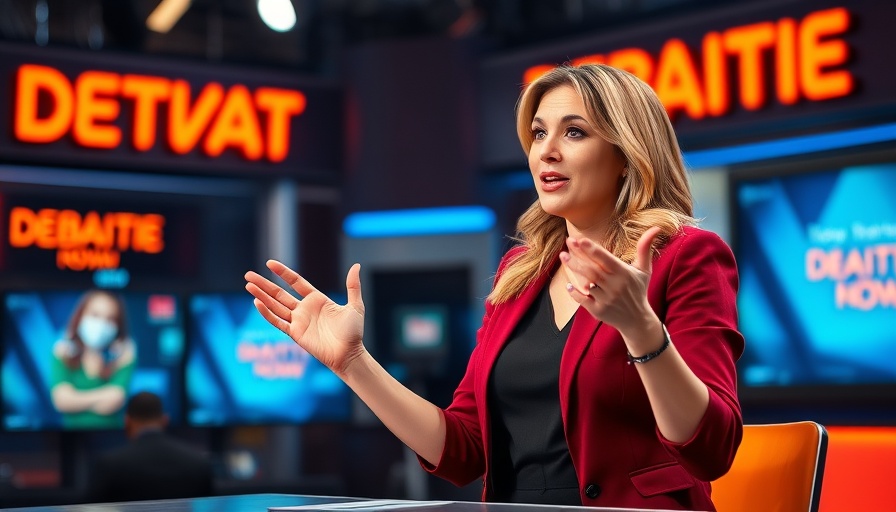
Lively debate discussion on TV show about men vs gorilla.

Who Would Win: 100 Men vs. 1 Gorilla?

The recent viral debate revolving around the hypothetical scenario of 100 men versus a single gorilla has captured imaginations and sparked discussions across various demographics. This spirited conversation, seen in the video titled "A lively backstage debate broke out: 100 men vs 1 gorilla — who wins? We'll let you decide," pivots on not only physical capabilities but societal perceptions of courage and valor.

In "A lively backstage debate broke out: 100 men vs 1 gorilla — who wins? We'll let you decide," the discussion dives into the unique societal implications of strength and gender perceptions in this hypothetical scenario.

The Strength of the Gorilla: A Real Force of Nature

Gorillas are well-known for their exceptional physical strength and power. An adult male gorilla can weigh between 300 to 400 pounds, with the strength equivalent to 4 to 10 men depending on the context. Their massive arms and strong grip allow them to lift heavy weights with relative ease. This capacity raises fundamental concerns about the feasibility of 100 men prevailing against such an embodiment of raw force. The fact that this hypothetical situation is even eagerly discussed reveals an inclination to test the limits of human audacity against nature’s brute power.

Societal Reflections Through Hypotheticals

The debate underscores deeper societal issues and questions of masculinity. Many participants discussing this matchup speculate on what it signifies regarding human capabilities and evoke traditional archetypes of male strength and competition. This fascination often leads to paradoxical discussions about the values we assign to brute force and the contours of courage. For instance, some participants argued that a carefully chosen group of men—with personalities like that of championship boxer Anthony Joshua—could potentially defeat the gorilla. Yet, a broader discussion emerges when examining which attributes, like strategy or sheer force, hold more sway in such a contest.

Cultural Context and the Role of Gender

Interestingly, the debate took a gendered tone where comments directed towards women reflected certain stereotypes. The claim that 'women don’t think about this' echoes a mode of thinking that often limits female perspectives within male-dominated spheres. This presents a significant opportunity for re-examining societal roles. Why are these discussions predominantly framed around males engaging with a gorilla? It begs the question of what role women—or the broader representation of gender in society—play in discussions of strength and resilience.

Revisiting Heroes: Are We Choosing Wisely?

When participants suggested they could pick any 100 men, it highlights a traditional association with heroism and power. However, our fascination with such comparisons also invites us to redefine what it means to be a hero: is it simply about physical prowess, or could it be about resilience, intelligence, and moral strength? As discussions evolve, the modern-day hero may not just be the strongest individual, but those who champion shared values within community contexts.

Future Predictions: The Relevance of This Dialogue

As this debate circulates in popular culture, its implications on masculinity and gender roles could resonate beyond mere entertainment. Engaging with hypotheticals like the gorilla debate may future-proof society by challenging long-held notions about physicality and genderimposed roles, creating more space for nuanced representations in society. The discussion of working collaboratively versus primarily competing with brute force can lend itself to leadership styles, both in business and politics.

Breaking Down Misconceptions

The anticipated spectacle of 100 men versus one gorilla may encapsulate a thrilling narrative, but it is crucial to extract value from the tangled web of expectations about strength, bravery, and gender norms. Men vying against a powerful creature can also highlight the circumstances where collaboration, encouragement, and teamwork are essential. This perspective can be significant, especially considering the landscape of media that often glorifies the lone hero.

Conclusion: Challenge Your Perspectives

This lively debate reveals not only an entertaining hypothetical but also challenges us to rethink issues of strength, gender roles, and societal values. By reflecting on this scenario, individuals can confront the cultural paradigms that shape their understanding of physical power and heroism. Hence, what are your thoughts about the prospects of strength, masculinity, and the future social narrative? The dialogue deserves to continue, promoting critical thinking and inclusivity as we navigate these concepts.

Intracontinental Currents

13 Views

0 Comments

Write A Comment

*
*
Please complete the captcha to submit your comment.
Related Posts All Posts

Navigating Ghana's Search for a New Coach Ahead of the 2026 World Cup

Update Ghana's Quest for a New Head Coach: Timing Is Everything As the world gears up for the 2026 World Cup, Ghana finds itself at a critical juncture in its football journey, desperately searching for a new head coach. After the disappointing 5-1 defeat by Austria, which acted as a catalyst for the decision to replace coach Otto Addo, the Ghana Football Association (GFA) has come under the spotlight. With numerous potential candidates in the fray, the decision on who will lead the Black Stars into the global arena could set the tone for the nation’s aspirations in the tournament.In '2026 World Cup: Ghana in Frantic Search for New Head Coach', the urgency of Ghana's footballing scenario comes to the forefront, prompting an analysis of how these developments affect their World Cup aspirations. Competitive Landscape: Who's in the Running? In light of recent discussions within the GFA, several high-profile coaches have been linked to the position. Names like Paulo Bento, Carlos Queiroz, and Fernando Santos have surfaced, along with Spanish coach Felix Sanchez Bas, formerly at the helm of Qatar and Ecuador. Given the high stakes of the World Cup, the choice of coach will require the GFA to align its ambitions with both short-term aspirations and long-term development. The Long-Term Vision vs. Immediate Results The crux of the dilemma lies in whether Ghana's football authorities will opt for an immediate fix or a coach with a more developmental approach. The sports minister has indicated the expectation for Ghana to perform admirably, ideally reaching the quarterfinals. Yet, the reality is that the road to the World Cup is fraught with uncertainty, especially considering the short timeframe for preparation. Choosing a coach who can quickly galvanize the team amidst mounting pressures could prove invaluable. Alternatively, a candidate who is prepared to focus on gradual improvements may lay the groundwork for sustainable success beyond the World Cup. Injury Woes: What This Means for Ghana’s Star Players Compounding the challenges, the potential absence of star player Mohammed Kudus due to a thigh injury adds another layer of urgency to the situation. Kudus shone at the last World Cup, having already earned his status as a standout player for Ghana. His injury not only puts him at risk of missing the tournament but also raises concerns about the team's ability to compete at the highest level without their key asset. Both Kudus' and Mohammed Salisu's injuries leave Ghana with significant gaps in its squad as it prepares for the world's grandest stage. Incumbent on the GFA is the necessity of swiftly identifying replacements and ensuring the remaining players can step up, reinforcing the notion that success in football often hinges on timing and strategy. Revisiting Goals: A Clearer Focus Required The questions surrounding Ghana's ambitions—and in particular the role of the new coach—need addressing amid unremitting speculation. Are the Black Stars aiming simply to participate, or do they plan to challenge for significant achievements? Establishing a balanced expectation will be vital in formulating tactics that align with the talent at hand. The recovery from past disappointments in World Cup competitions should encourage a culture that not only seeks immediate success but also views talent development as a priority. Without a clearly defined roadmap of both tactical and coaching priorities, Ghana risks unfulfilled potential on the international stage. A Call to Action for Ghanaian Football In light of these pivotal developments, now is the time for the GFA to foster a footballing environment that prioritizes collaboration between the ministry, the association, and fans alike. This collective approach could facilitate a robust strategy that adequately prepares the Black Stars for the World Cup while nurturing future generations of talent. The upcoming months will challenge the leadership skills of Ghana’s football authorities, but the potential to turn this transitional phase into one of growth remains. With the right vision—whether through a new coach or an established philosophy—the nation can rise to the occasion and showcase its true footballing prowess on the world stage.

Confronting Bullying in Schools: Understanding Its Causes and Solutions

Update Understanding Bullying: A Global EpidemicBullying in schools is a pervasive issue that extends far beyond the confines of individual classrooms, impacting children and adolescents worldwide. As highlighted in the video *Bullying in Schools: Why It Happens & How We Can Stop It*, this phenomenon is not merely a trivial aspect of school life but a complex social problem that manifests in varied forms. Bullying can be physical, emotional, or digital, and its ramifications can lead to severe mental health issues for victims, including anxiety, depression, and in extreme cases, suicide.In *Bullying in Schools: Why It Happens & How We Can Stop It*, the discussion dives into the complexities of bullying behaviors among students, showcasing insights that warrant deeper analysis here. The Roots of Bullying BehaviorUnderstanding why bullying occurs is imperative for developing effective prevention strategies. Research indicates that children who engage in bullying often do so to exert power over others, often as a response to their circumstances or experiences at home. Factors like family dynamics, societal expectations, and exposure to violence can influence a child’s propensity to bully. With the increasing prevalence of social media in Africa and beyond, the dynamics of bullying have shifted, leading to the rise of cyberbullying, which poses unique challenges for educators and parents alike.Intersecting Issues: Socioeconomic Factors and Cultural NormsThe relationship between socioeconomic factors and bullying cannot be overlooked. In many African countries, economic hardship can lead to stress within families, which in turn can foster environments conducive to aggressive behaviors among children. Cultural norms also play a significant role; in some communities, aggressive behaviors may be normalized or even encouraged. Engaging with local communities to shift these cultural perceptions is essential for developing long-term solutions to bullying.Success Stories and Practical SolutionsSeveral initiatives have emerged within various countries in Africa that showcase effective methodologies in combating bullying in schools. Programs integrating anti-bullying campaigns into school curriculums have shown promise, demonstrating a collaborative approach among educators, students, and parents. Moreover, peer mediation strategies have proven effective, providing victims with a voice and a safe outlet for expressing their concerns.Future Directions: A Call for ActionWhile acknowledging the strides made, it is crucial to sustain momentum in the fight against bullying. The involvement of governmental bodies, NGOs, and educational institutions is paramount to create comprehensive policies that advocate for safe learning environments. The implementation of robust anti-bullying laws, along with dedicated training programs for teachers and school staff, represents a strategic step toward alleviating this widespread issue.Conclusion: Empowering the Future GenerationIn conclusion, tackling bullying in schools requires a multifaceted approach that considers cultural, social, and economic contexts. Continuous research and dialogue among stakeholders can facilitate the development of impactful programs that empower children and foster resilience. By prioritizing this issue, we can aim for a transformative shift in how schools address bullying, fostering an environment of respect and dignity for all students.

Nigeria's New Borrowing Plan: A Risky Gamble or Path to Growth?

Update Understanding Nigeria's Ballooning Debt: The New Fiscal Landscape Recently, the Nigerian government has escalated its borrowing plan significantly, raising the 2026 borrowing projection from an earlier estimate of 17.89 trillion naira to a staggering 29.2 trillion naira. This drastic shift underlines the government's attempt to cope with an expanding budget deficit, which is now projected to exceed 31 trillion naira against an anticipated total expenditure of 68.32 trillion naira, juxtaposed with expected revenue of only about 36.87 trillion naira. As the country grapples with the implications of such expansive fiscal policies, a deeper analysis of the potential consequences reveals a challenging economic landscape ahead.In 'Nigeria Raises 2026 Borrowing Plan to N29.2Trn', the discussion dives into the implications of Nigeria's escalated borrowing strategy, prompting a critical analysis of its potential impact on the national economy. The Implications of a Widening Budget Deficit The news surrounding the elevated borrowing figures naturally raises questions concerning the sustainability of such fiscal strategies. Political leaders and economic experts point out that while increased spending on infrastructure and other growth-critical areas is essential for Nigeria—especially during a time when the administration aims to achieve a $1 trillion economy by 2030—this debt could signal a perilous path towards a debt trap if revenue generation does not improve significantly. The soaring deficit, characteristic of over a decade of consistent shortfalls, showcases a systemic issue within the Nigerian economy. Debt Servicing Costs: A Growing Concern With a large portion of the budget allocated to servicing debt—projected at 15.43 trillion naira—the rising costs raise alarming flags. Observers worry that the nation might be caught in a cycle where borrowing becomes necessary not just to fund growth, but also to pay off existing debts. Although the government argues that borrowing can drive significant growth, it is crucial to analyze how efficiently these borrowed funds can be utilized in a transparent manner, especially in an environment that has struggled with accountability in the past. Future Growth Prospects: Are We Ready? Nigeria's ambitious shift towards a robust borrowing plan is based on an expectation of improved tax inflow and favorable oil benchmarks; however, the reality suggests a complex interplay of challenges. The government’s ability to deepen revenue generation through not only taxes but enhanced oil exports and improved economic activities will determine whether the current borrowing does indeed foster growth or leads to a deeper crisis. Addressing the significant infrastructure deficit, estimated at $100 billion, requires urgent and smart investment strategies rather than mere debt accumulation. Context Matters: Global Trends and Local Realities Globally, many economies rely on debt as a means to stimulate growth, however, the nuances of Nigeria's situation must be considered. Comparatively lower debt-to-GDP ratios may appear favorable, but when juxtaposed against revenue generation metrics, the narrative drastically shifts to a more concerning picture. Observers urge policymakers to prioritize reforms that enhance the revenue side of the equation, advocating for a more diversified economic structure that fosters sustainable growth. Call for Transparency: A Necessary Component of Trust As the government embarks on this ambitious borrowing trajectory, the need for transparency in how debts are allocated and utilized is paramount. Previous experiences with ineffectiveness and corruption underscore the importance of monitoring and reporting mechanisms that enhance public trust in government actions. A transparent framework is essential not only for political legitimacy but also for ensuring that the benefits of increased spending translate into tangible growth metrics. Conclusion: Navigating a Delicate Economic Reality The expanded borrowing plan announced by the Nigerian government signals a complex and precarious fiscal approach aimed at bolstering economic growth in the face of substantial challenges. As the landscape of Nigeria's economy continues to evolve, stakeholders must pay close attention to not only the borrowing figures but also the implementation of smart policies that aim to enhance revenue generation and economic diversification. Ultimately, the trajectory of Nigeria’s fiscal strategies may well dictate the long-term outcomes for both the economy and the everyday lives of its citizens.

Terms of Service

Privacy Policy

Core Modal Title

Sorry, no results found

You Might Find These Articles Interesting

T
Please Check Your Email
We Will Be Following Up Shortly
*
*
*