Add Row
Add Element
Add Element
  • Channel
    • VIRTUAL EVENTS BILLBOARD
    • CONFERENCES & CONVENTIONS
    • # THE VORTEX ALTITUDE
  • Featured
    • THE VORTEX VISIONARY VIEW
    • African Changemakers
    • Future of Africa
    • Sustainable Africa
    • Women Vortex
    • Vortex Global Pulse
    • Habitat Trails
    • InterContinental Issues
    • Intracontinental Currents
    • #FUTURE FEATURE INVITATION
June 06.2025
3 Minutes Read

Lagos Sallah 2023: Celebrating Amid Economic Challenges and Resilience

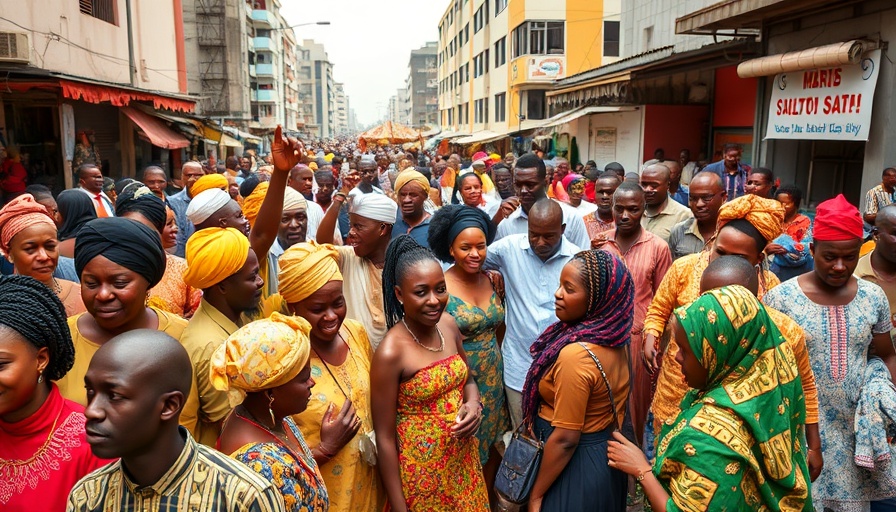
Lagos Sallah celebrations 2023: festive gathering in urban setting.

Amidst Economic Woes, Lagos Celebrates Sallah with Resilience

The annual Sallah celebration in Lagos, like many others across the continent, showcases a remarkable duality: an enduring spirit of joy amidst notable economic hardships. This year's festivities witnessed a somewhat diminished crowd at major parks, with many attributing the low turnout to the pressing economic realities facing families.

In 'Lagos Celebrates Sallah Holiday Despite Economic Challenges', the discussion dives into the reality of this year's Sallah festivities, exploring key insights that sparked further analysis.

Understanding the Turnout: A Community Divided

This year, fewer people flocked to the JJT Park in Alausa, a popular gathering spot during festive occasions. Despite the heavy rains, individuals like Sam Dandy, our local correspondent, interacted with those who managed to participate. While many expressed disappointment over the fewer attendees compared to previous years, they still held on to the significant essence of Sallah—appreciation, love, and sharing within the community.

Economic Challenges: A Strain on Sallah Celebrations

The narrative surrounding this year's celebration cannot ignore the harsh economic conditions that have gripped Nigeria and, by extension, the African continent. Reports indicate a marked increase in prices for essential items as families navigate the impact of a sluggish economy. The stark contrast of this year's Sallah celebrations compared to previous years highlights how economic realities often overshadow cultural celebrations. Many families opted to hunker down in their homes rather than indulge in the communal vibe, both out of necessity and practicality.

Resilience in the Face of Adversity

Yet, beneath this struggle lies a proactive resilience among the Yoruba people of Lagos. Discussions with attendees reveal an unwavering spirit. Despite financial constraints, the community prioritized their participation in Sallah, embodying a powerful collective ethos of pushing through difficulties. The refrain 'keep pressing on' echoed across interactions, suggesting that many choose to celebrate life, community, and culture, even amidst challenges.

Reflections on Cultural Significance

Taking a step back, the significance of Sallah transcends mere celebration. It's a powerful sociocultural event that binds individuals and families, providing a respite from daily struggles. This year's celebrations, while not reminiscent of past joyous gatherings, still carry profound meaning. The camaraderie displayed among individuals signifies not just a collective celebration, but a deep-rooted tradition that holds immense value to the community.

Hope for the Future: Reigniting the Spirit of Sallah

As the days of Sallah continue, there's hope among the populace that attendance will increase, with families perhaps venturing out more freely after the initial days of rain. There is an understanding that communal festivities act as a unifier, blending the sentiments of pain with warmth, appreciation, and fellowship. This year, the perseverance of Lagosians during the Sallah celebration serves as a reminder that, regardless of economic strife, the human spirit can usually find joy in the simplest of connections.

Emphasizing the Broader African Context

While Lagos serves as a narrative focal point, the economic challenges are not unique to Nigeria. Many nations across the African continent are grappling with similar issues, whereby cultural celebrations face the repercussions of rising costs and economic stresses. The outcome of this year's Sallah can serve as a case study for understanding these dynamics, encouraging policymakers to reflect on ways to bolster economic resilience throughout the continent while preserving these vital cultural celebrations.

In analysis, discussing festivities such as this unearths critical reflections on societal values and priorities, particularly in the context of Nigeria's current economic landscape. As the event continues, both journalists and citizens alike must consider the implications of these challenges while celebrating the unwavering spirit of resilience.

Intracontinental Currents

11 Views

0 Comments

Write A Comment

*
*
Related Posts All Posts

Nigeria's Alarming Child Sexual Abuse Statistics: Urgent Reform Needed

Update Unveiling the Silent Epidemic: Child Sexual Abuse in Nigeria Nigeria is grappling with a harrowing truth: the prevalence of child sexual abuse has reached what experts describe as a silent epidemic. With an alarming statistic indicating that 38% of children in the country have faced sexual violence, the issue has become a dark mirror reflecting the vulnerabilities in the fabric of Nigerian society. Reports suggest that 25% of girls and 10% of boys experience this ungodly assault before reaching adulthood, yet the country’s justice system remains alarmingly ineffective, with shockingly low conviction rates.In 'Child Sexual Abuse in Nigeria: 38% of Children Affected, Lagos Records 3,600 Cases,' the discussion dives into this pressing issue, exploring key insights that sparked deeper analysis on our end. The Grim Reality: Data and Trends In Lagos alone, over 3,600 cases of child sexual abuse have been recorded in a recent period, a number that paints a disturbing picture of a societal malaise. What deepens the concern is that only nine convictions were secured between 2020 and 2024, despite the presence of a Sex Offenders Register designed to hold perpetrators accountable. This discrepancy between the number of reported cases and successful prosecutions raises questions about the underlying legal and social structures that inhibit justice for young survivors. Case Studies: High-Profile Trials and the Pursuit of Justice Recent high-profile cases have shone a spotlight on the persistence of child sexual abuse and the fight for justice. The life sentences meted out to perpetrators like Kayode Abegunde and Olumuyiwa Adjoto are milestones in a landscape often marred by impunity. However, these cases, such as the 2024 Ajah toddler abuse case and the ongoing saga surrounding Ochanya’s case, highlight the systemic weaknesses that allow such atrocities to persist unnoticed. The questions raised about societal accountability emphasize the urgent need for comprehensive reforms in both the legal and social support systems. Sociocultural Factors: The Stigma That Silences Victims With a staggering 96.7% of victims not reporting their abuse to the police, the stigma surrounding child sexual abuse remains a formidable barrier to justice. Victims often fear social ostracism, retaliation, or disbelief from authority figures who should protect them. This culture of silence further perpetuates the cycle of abuse, leaving young children vulnerable, with many perpetrators free to ply their trade. Tackling this stigma is vital to creating an environment where victims feel safe to come forward, enabling the justice system to function more effectively. Call for Urgent Reforms: What Needs to Change? The urgent call for reforms in Nigeria’s approach to child sexual abuse cannot be overstated. Advocates, including experts like Irene Awunah-Ikyeghe, emphasize the importance of legislative changes that provide robust protections for children and improved mechanisms for reporting and prosecuting abuse. Organizational reforms within the police and judicial systems could create a more responsive and supportive environment that prioritizes the needs of victims over procedural hurdles. Future Predictions: A Path Toward Healing and Justice Looking ahead, interactive platforms for community education, legislative advocacy, and survivor support programs may offer glimmers of hope. Engaging influential figures in society and leveraging technology could spark a national dialogue about child sexual abuse, motivating communities to break the silence together. While the road to justice is fraught with challenges, collective action, informed advocacy, and a commitment to reform may eventually tilt the scales in favor of Nigeria’s most vulnerable population. In summary, the pressing issue of child sexual abuse in Nigeria illuminates the profound need for systemic reform and societal change. The path forward is paved with the challenges of stigma, inadequate legal frameworks, and societal indifference—but also with the potential for transformational change driven by empowered voices calling for justice.

What Nigeria's New Election Results Law Means for Electoral Credibility

Update Understanding the Impact of Electronic Transmission on Nigerian Elections The recent approval by the Nigerian Senate for the electronic transmission of election results to the Independent National Electoral Commission (INEC) via its Result Viewing Portal marks a pivotal moment in the country's electoral process. By retaining manual collation as a fallback, the lawmakers attempt to strike a balance between adopting modern technology and ensuring a safety net in case of technological failures. This dual approach raises critical questions about the integrity and transparency of Nigeria's electoral system in conjunction with upcoming general elections in 2027.In 'Electoral Credibility: CSOs Urge Lawmakers to Harmonise Legislation,' the discussion delves into the pivotal changes surrounding Nigeria's electoral laws and the ramifications of integrating electronic transmission—an exploration that necessitates deeper analysis. Protests, Advocacy, and Legislative Response The decision follows significant protests and criticism from opposition parties and civil society organizations (CSOs) who fear that the reliance on manual processes might dilute the transparency benefits that can be realized through electronic methods. Advocates within CSOs argue that the integrity of the democratic process hinges on technological advances; without them, there’s a risk of perpetuating systems that foster mistrust among the electorate. The manipulation of results is a two-edged sword, and the blend of manual and electronic methods could either alleviate or exacerbate these issues. Assessing the Balance Between Technology and Inclusivity While many herald the advent of electronic transmission as a progressive step, it is vital to address the underlying issue of accessibility and inclusion. For technology to serve as a genuine boon in the electoral process, lawmakers must ensure widespread access to the necessary tools and platforms among the electorate, particularly in marginalized communities. This crucial facet of inclusivity appears to be overlooked amidst the political discourse, leaving room for skepticism about overall trust in Nigeria’s democratic process. The Road Ahead: Building Trust in Nigeria’s Democracy As we reflect on the implications of this legislative action, it is essential to explore how public confidence in Nigeria’s electoral process can be bolstered. Transparency is achieved not just through the mechanics of how votes are cast and counted but through a pervading culture of accountability. Stakeholders must actively engage the public in meaningful dialogues about the election processes, ensuring that citizens feel empowered and informed. Strengthening robust feedback mechanisms and community engagement initiatives might enhance this trust, potentially transforming voter apathy into active participation. Future Trends and Predictions for Electoral Processes in Africa Looking beyond Nigeria, we can expect the trend of adopting technology for electoral processes to continue across the African continent. As countries grapple with political instability, strained governance, and calls for reform, the embrace of digital solutions could represent a turning point. However, this transformation must be pursued with caution; a thorough examination of the risks surrounding cybersecurity, digital literacy, and equitable access will determine whether these changes genuinely fortify democratic practices or merely serve as cosmetic fixes to deep-rooted issues. Counterarguments: The Case for Manual Oversight Despite the undeniable potential of technology in elections, some experts argue that manual processes should not be entirely dismissed. The reliance on electronic systems entails certain risks, including cyber threats and technical malfunctions that could jeopardize the accuracy of results. Finding a balanced approach, therefore, is vital; continuous scrutiny of both systems could facilitate effective oversight and standardize the process to ameliorate public concern regarding electoral fraud. Emphasizing the Importance of Electoral Integrity As Nigeria embarks on what promises to be a tumultuous journey toward the 2027 elections, there lies an urgent need to prioritize electoral integrity. This focus extends beyond the mere implementation of processes; it demands a collective commitment from all stakeholders—government, civil society, and the electorate—to uphold democratic norms. As discussions continue, it will be crucial to ensure that legislation not only addresses current needs but also sets the foundation for a transparent and trustworthy electoral future.

NEPZA's Push for EU Supply Chains: A Game Changer for Nigeria

Update Strengthening EU-Nigeria Trade Relationships: A Strategic Move The Nigeria Export Processing Zones Authority (NEPZA) has recently made a compelling case to the European Union (EU) for the integration of Nigeria’s Special Economic Zones (SEZs) into European supply chains. This strategic initiative, discussed at a pivotal trade and investment meeting in Abuja, promises to not only accelerate Nigeria’s industrialization but also enhance export capabilities and reinforce trade ties between the EU and Nigeria.In NEPZA Targets EU Value Chains to Power Jobs, Exports, Growth, the discussion dives into the potential impact of connecting Nigeria’s Special Economic Zones to European supply chains, exploring key insights that sparked deeper analysis on our end. The Role of Special Economic Zones At the heart of this discussion lies the significant potential of Nigeria's Free Trade Zones, which are positioned as gateways into global manufacturing value chains. By plugging into these chains, Nigeria could leverage its natural resources and burgeoning workforce, fostering an environment poised for economic expansion. Dr. Femi Egbesola, President of the Association of Small Business Owners of Nigeria, highlighted that such integration could lead to substantial job creation and boost the local economy, ultimately benefiting all stakeholders involved. A Gateway to Industrialization Nigeria’s aim to attract EU investments by enhancing its supply chains reflects a broader strategy to revitalize its industrial landscape. Historically, Nigeria has grappled with economic fluctuations due to its dependence on oil exports and fluctuating global prices. The transition to a more diversified economic model hinges upon the successful implementation of this vision and a commitment from EU partners to invest in local industries. Current Trends and Future Predictions The call for integrating into EU value chains is timely, considering recent global shifts towards localized manufacturing and sustainable sourcing. Countries are increasingly evaluating their relationships with suppliers, with many EU firms looking to mitigate risks by diversifying their supply channels. With rising global demand for African products, Nigeria’s booming agriculture and burgeoning textile industries present unique opportunities. If effective partnerships are established with EU countries, the anticipated industrial growth could see Nigeria emerge as a significant manufacturing hub on the continent. Counterarguments: Navigating Challenges Ahead While the proposal is ambitious, it is not without its challenges. Critics may point to the instability in Nigeria’s political landscape, which can deter foreign investment. Moreover, concerns over infrastructure deficits, bureaucratic hurdles, and enforcement of regulations in the SEZs may pose significant risks to potential investors. Thus, ensuring a conducive business environment is paramount. The Nigerian government must prioritize infrastructure development and enforcing policies that protect investments to realize the vision laid out by NEPZA. Actionable Insights for Stakeholders For local entrepreneurs and investors, this development presents a unique opportunity to align with international partners. Small businesses should consider strategies to adapt their operations to meet global standards, which will be crucial in securing contracts with EU firms looking to forge new partnerships. Furthermore, ongoing engagement with government bodies to advocate for improved investment climates and infrastructure development will empower small business owners and entrepreneurs to take greater risks in scaling their operations. The Bigger Picture: A Move Towards African Economic Integration Plugging into EU value chains not only aligns with Nigeria’s economic growth prospects but also plays a pivotal role in the broader narrative of African continental integration. As other nations across Africa observe the outcomes of this strategic move, it could pave the way for collaborative trade practices that foster interconnectedness amongst African economies. Ultimately, realizing this vision requires collective action—from government policymakers to private sector leaders, working in tandem to enhance Nigeria’s global competitiveness. The relationship between Africa and Europe is evolving, and Nigeria is poised to be at the forefront of this transformation.

Terms of Service

Privacy Policy

Core Modal Title

Sorry, no results found

You Might Find These Articles Interesting

T
Please Check Your Email
We Will Be Following Up Shortly
*
*
*