Add Row
Add Element
Add Element
  • Channel
    • VIRTUAL EVENTS BILLBOARD
    • CONFERENCES & CONVENTIONS
  • Featured
    • THE VORTEX VISIONARY VIEW
    • African Changemakers
    • Future of Africa
    • Sustainable Africa
    • Women Vortex
    • Vortex Global Pulse
    • Habitat Trails
    • InterContinental Issues
    • Intracontinental Currents
    • #FUTURE FEATURE INVITATION
October 15.2025
2 Minutes Read

Africa's Clean Energy Revolution: Unstoppable Momentum or Too Late?

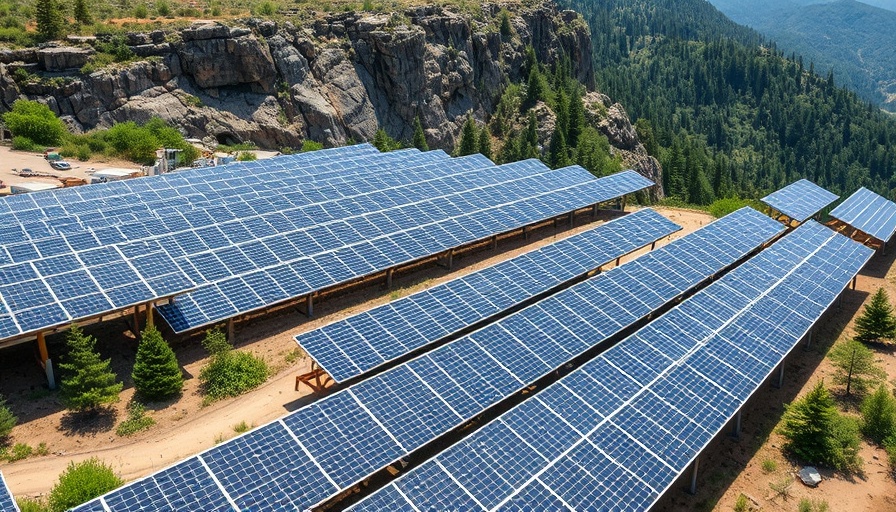
Solar panel farm in mountainous Africa, symbolizing clean energy revolution.

The Clean Energy Revolution: An Imperative for Africa's Future

The recent call from the United Nations for an intensified global shift to clean energy underscores an imperative that resonates particularly within Africa's sprawling landscapes and burgeoning economies. As the narrative of renewable energy gains momentum worldwide, Africa stands at a pivotal junction where its vast natural resources could either propel or hinder its place in the global market.

Historical Context: The Roots of Renewable Capitalization

Historically, Africa has been at the mercy of archaic energy systems primarily fueled by fossil resources. However, recent insights reveal that renewable energy sources—solar, wind, and hydropower—are gaining traction, marking a significant pivot from the dependency on coal and oil. Countries like South Africa and Morocco are leading the charge within the continent, showcasing how an investment in renewables could play a transformative role in advancing economic growth and energy security.

Economic Opportunities Amidst Challenges

The global clean energy shift is more than a mere trend; it offers sustainable economic prospects, especially for Africa. The International Energy Agency projects that Africa's investment in renewable technologies could create thousands of jobs and enhance energy access for millions. Yet, these benefits are jeopardized by sluggish political commitments and inadequate infrastructure. Experts warn that without robust policies supporting clean technology adoption, the continent risks becoming further marginalized in a geopolitical climate increasingly favoring clean energy.

The Coming Geopolitical Shift: Implications for Investment

As countries scramble to meet ambitious carbon neutrality targets, Africa's role as a significant player in the renewable energy sector could reshape international relations. The growing interest from global powers such as China and the EU in forming energy partnerships with African nations highlights this shift. Policymakers and business leaders must seize this moment, crafting frameworks that not only attract foreign investments but also ensure that local communities benefit from these ventures.

Actionable Insights for Policymakers and Investors

To harness the clean revolution effectively, specific actionable strategies need implementation: prioritizing investment in infrastructure, enhancing human capital through education and training, and establishing regulatory frameworks that promote private sector participation in renewable projects. Such measures will ensure that Africa is not only on the clean energy map but is thriving as a leader in innovation and sustainability on the global stage.

As the clean energy revolution accelerates, Africa holds a critical opportunity to redefine its economic landscape. Business leaders, politicians, and investors must act decisively to capitalize on this momentum. Today’s decisions will dictate the continent’s energy future and its role in the global economy.

Vortex Global Pulse

2 Views

0 Comments

Write A Comment

*
*
Related Posts All Posts

UNEA-7: How Africa's Environmental Leadership Shapes Global Solutions

Update Environmental Diplomacy Takes Center Stage in Nairobi The recent conclusion of the seventh session of the United Nations Environment Assembly (UNEA-7) in Nairobi, Kenya, marks a pivotal moment for global environmental governance. With representatives from 186 countries, this assembly emphasizes the importance of collaboration in tackling pressing environmental issues that impact the continent and the world. The assembly resulted in 11 resolutions and various decisions aimed at creating sustainable solutions for a more resilient planet. This radical shift towards environmental diplomacy showcases Africa's emerging role on the global stage, drawing attention from business leaders and policymakers alike. Key Resolutions Addressing Critical Issues The resolutions adopted at UNEA-7 cover a spectrum of critical environmental challenges. Among the notable commitments are initiatives focused on the management of resources essential for the clean energy transition, as well as international cooperation to combat phenomena like wildfires which threaten economic stability across Africa. As the Mediterranean basin faces increasing environmental challenges, the joint responses from African nations signify a broader commitment to sustainable governance. These actions align with Africa's unique geopolitical positioning within global trade and economic shifts, resonating with stakeholders focused on the continent’s future. The Paris Agreement at 10: A Call to Action Coincidentally, the UNEA-7 took place on the 10th anniversary of the Paris Agreement, a landmark treaty that aims to curtail global temperature rises. This convergence served as a moment for introspection among leaders at UNEA-7 to evaluate the commitments made under this foundational climate agreement. It is a reminder that participation in multilateral efforts remains essential for addressing climate change, which disproportionately affects African nations. The UN Secretary-General’s remarks during this period called for renewed courage to face the climate crisis, urging unified action to forge a livable future for all. The Role of Africa in Future Environmental Policies As UNEA-7 demonstrates, Africa's leadership in environmental discourse is paramount. The assembly underscored how addressing environmental degradation ties directly into economic stability, social equity, and sustainable development. For investors and policymakers, the outcomes from Nairobi present clear implications for Africa’s economic landscape, especially in relation to green finance and sustainable investments. Collaborative local initiatives developed at this assembly hold promise for driving economic growth while preserving environmental integrity. Moving Forward: Challenges and Opportunities The path outlined at UNEA-7 invites various stakeholders to partake in advancing environmental solutions. However, the challenge of integrating these decisions into actionable frameworks remains significant. Policymakers must translate resolutions into tangible benefits for their communities, particularly in areas that have seen stark ecological and economic decline. By focusing on local capacities and fostering partnerships between public and private sectors, Africa can harness these new commitments to improve governance and secure stronger foreign relations enhancing trade and investment opportunities. The essence of UNEA-7 goes beyond environmental assessments; it is a clarion call for a paradigm shift in how Africa engages with global environmental politics. By acknowledging the interconnections between climate action and economic resilience, African policymakers can transform challenges into opportunities that fuel sustainable progress. As this vital environmental dialogue unfolds, ongoing investment in sustainable initiatives will be crucial for ensuring Africa’s proactive engagement in global policies shaping economic and environmental futures. By familiarizing ourselves with the commitments made at UNEA-7, stakeholders position themselves to partake in a transformative shift that favors both ecological balance and economic growth.

Africa’s Role in Global Sustainability: Learn from the 2025 Champions of the Earth

Update Overview of UNEP’s 2025 Champions of the Earth In a world rapidly facing the consequences of climate change, the United Nations Environment Programme (UNEP) has recognized leaders dedicated to combatting this crisis with its prestigious announcement of the 2025 Champions of the Earth. This year's cohort includes five remarkable visionaries ranging from climate justice advocates to innovative architects, each committed to driving concrete actions that tackle climate challenges across the globe. Spotlight on Innovative Leadership The essence of the Champions of the Earth award is not merely ceremonial; it highlights the pivotal roles individuals and organizations play in fostering environmental sustainability. For instance, Cynthia Houniuhi, a champion from the Solomon Islands, leads a youth organization championing climate justice. Her efforts have gained international attention, especially after addressing the International Court of Justice to clarify the legal obligations states have in preventing climate-related harm. Empowering Local Communities through Green Initiatives Another inspiring figure is Supriya Sahu from Tamil Nadu, India, who is pioneering sustainable cooling initiatives that have not only mitigated urban heat but also created millions of green jobs. These initiatives underscore the growing recognition that local actions can yield significant impacts on environmental sustainability and economic resilience, showcasing the profound interconnectedness of climate and development agendas. Redefining Sustainable Architecture in Africa Mariam Issoufou’s architectural practice exemplifies the emerging trend of sustainable building practices rooted in cultural heritage. Based in Niger, her designs utilize local materials to promote passive cooling, offering innovative solutions that could inform broader policies across the African continent. This approach can have a far-reaching impact on low-carbon development strategies in the context of Africa’s urbanization challenges. Utilizing Technology for Environmental Protection In Brazil, the non-profit organization Imazon is leveraging advanced AI technology to combat deforestation, showcasing how digital tools can be harnessed for environmental governance. Their strategies not only protect vital ecosystems but also provide models for similar initiatives globally, particularly in regions prone to illegal logging and land degradation. The Global Implications of Local Actions As global leaders convene to address climate change on multiple fronts, the recognition of these Champions serves as a reminder that substantial progress lies in grassroots movements and the innovative leadership displayed by these individuals. It is crucial for business leaders, policymakers, and investors to pay attention to such developments, as they could inform future investment strategies and policy decisions, particularly on the African continent. Learning from the Champions For stakeholders in Africa’s economy and governance, understanding the strategies employed by the 2025 Champions offers invaluable insights into harmonizing economic ambitions with sustainable practices. Engaging with these narratives can help shape policies that balance environmental integrity with economic growth, thereby strengthening Africa’s position in global markets. As we reflect on the urgency of climate action and sustainable development, the stories of these Champions illuminate pathways toward an eco-centric future, urging all stakeholders to act decisively in furthering sustainability efforts.

Africa's Role in Achieving a Sustainable Future: Insights from the UN Report

Update A New Paradigm for Africa's Sustainable Future As the global conversation pivots towards sustainability, the UN Environment Programme (UNEP) emphasizes that a comprehensive reevaluation of our approaches is crucial for securing a better future not just for the planet, but for humanity as well. The latest report by UNEP presents a dual-pathway strategy outlining both social transformations and technological innovations vital for establishing sustainable economies. For Africa, a continent rich in resources yet grappling with economic disparities, these recommendations bear significant implications. Why a Transformative Approach is Critical According to the UNEP’s findings, adhering to conventional economic frameworks will propel us towards an environmental crisis significantly damaging our ecosystems and livelihoods. The stark projections indicate that failure to act could see global temperature rises exceeding critical thresholds and devastating annual GDP by 2050. This is particularly relevant for African nations that face disproportionate impacts from climate-related disruptions. Consequently, rethinking economic metrics beyond GDP—from mere financial wealth to inclusive indicators encompassing ecological and human capital—is essential. Interconnected Solutions: Harnessing Local Knowledge A successful transformation hinges on the inclusion of indigenous knowledge and community involvement in decision-making processes. In addressing Africa’s socio-economic challenges, it becomes imperative to blend local farming practices with contemporary sustainable methods. By fostering a shift toward circular economies, nations can reduce waste and create job opportunities within green sectors—benefiting both the environment and economic growth. Investments in Future Sustenance Policymakers and investors must pivot towards funding sustainable practices, which offer long-term benefits that far outweigh short-term gains. This transition involves investing in renewable energy, sustainable agriculture, and infrastructure that prioritizes resilience to climate impacts. Our analysis echoes the report's potential to uplift millions out of poverty and diminish health risks associated with environmental degradation. Cooperation Beyond Borders: A Step Towards Global Sustainability The interplay between Africa and global economic powers, notably within the frameworks set by entities like BRICS and partnerships with the EU, presents opportunities for collaborative sustainability efforts. Engaging in dialogue and policy formulation across these platforms can amplify Africa’s potential role in the global economy while addressing pressing environmental issues. Conclusion: A Call to Action for African Leaders The road to a sustainable future demands urgent action and collective responsibility. As highlighted in the UNEP report, the 'whole-of-society' and 'whole-of-government' approaches are not mere suggestions but necessities for fostering resilient economies. African nations must leverage their unique potentials to lead the charge in the global sustainability movement. As business leaders, investors, and policymakers, the time to act is now—together, we can ensure a healthier planet and prosperous future for generations to come.

Terms of Service

Privacy Policy

Core Modal Title

Sorry, no results found

You Might Find These Articles Interesting

T
Please Check Your Email
We Will Be Following Up Shortly
*
*
*